
Choosing the right centrifugal screen is not just about buying a metal component. It is about getting consistent performance, longer service life, better separation, and lower downtime in your process. Whether you are running a starch plant, sugar mill, food processing line, or chemical application, the screen basket you select directly affects output quality and operating efficiency.
If you are looking for a trusted centrifugal screen manufacturer and supplier in India, this guide will help you understand the product, compare options, and make a smarter buying decision. It is also useful if you want to evaluate a supplier like Fine Perforators, especially for working centrifugal screens designed for industrial use.
What Is a Centrifugal Screen and How Does It Work?
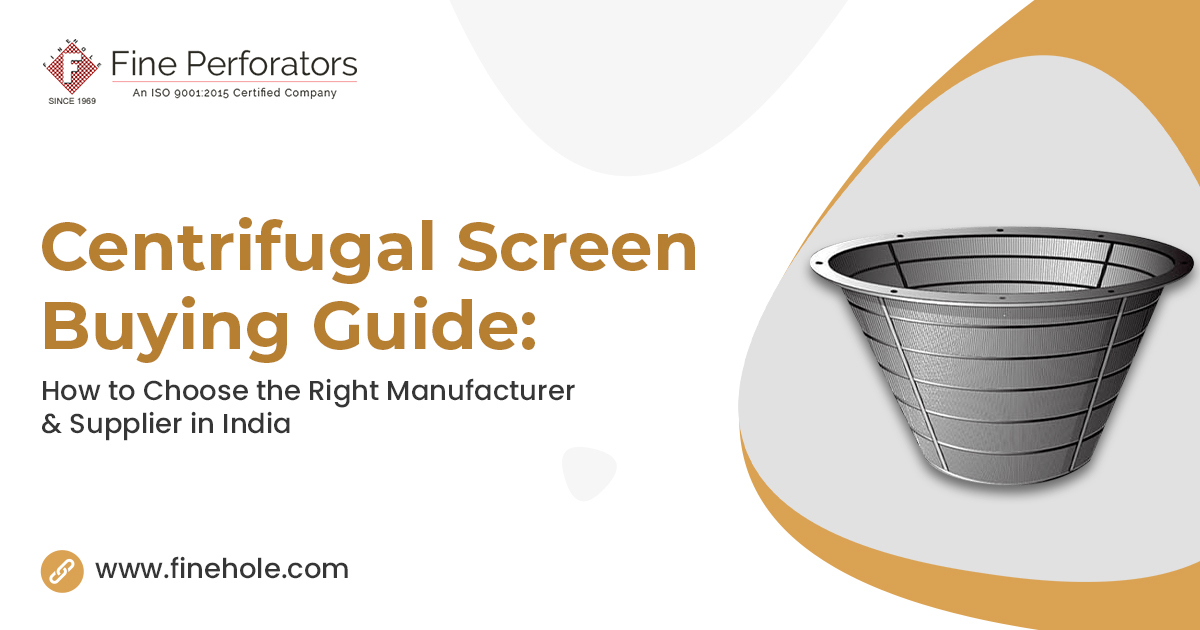
A centrifugal screen is a precision perforated or slotted basket used in separation equipment. It works by using centrifugal force to separate solid and liquid components. When the material is fed into the rotating basket, liquid passes through the screen openings while the retained solids move forward or stay inside depending on the process design.
In simple terms, the screen acts as the heart of the centrifuge. Its accuracy, open area, hole pattern, and material quality decide how well the machine performs. A poorly made screen can lead to clogging, poor separation, product loss, and higher maintenance costs.
Choosing the right partner is critical - you can learn more about centrifugal screen supplier selection in our detailed guide.
Types of Centrifugal Screens: Working, Supporting and Backing
Centrifugal screens are often built in different layers or structures depending on the machine and application.
Working screen
This is the main functional surface where separation takes place. It must be highly precise, durable, and resistant to wear.
Supporting screen
This layer provides structural strength. It helps the screen maintain shape under high-speed rotation and pressure.
Backing screen
This adds extra support and stability to the overall basket assembly. It improves life and reduces deformation during continuous use.
When comparing suppliers, ask whether they manufacture only the working screen or provide complete basket solutions with supporting and backing layers too. A reliable supplier should be able to guide you based on your equipment and process needs.
Stainless Steel, Copper and Brass, Choosing the Right Material
Material selection is one of the most important factors in centrifugal screen buying.
Stainless steel
This is the most common choice for industrial applications because it offers corrosion resistance, strength, and hygiene. It works well in food, chemical, and high-moisture environments.
Copper
Copper screens are used in specific applications where conductivity or special process requirements matter. They are less common but still valuable in certain industries.
Brass
Brass is known for good machinability and performance in selected uses. It is often chosen when a balance of durability and precision is required.
The right material depends on the process fluid, temperature, corrosion exposure, product type, and required screen life. A professional centrifugal screen supplier should help you choose the right alloy instead of selling a one-size-fits-all product.
Aperture and Open Area, A Quick Specification Guide
When selecting a centrifugal screen, technical specifications are as important as the material. Aperture size, centre distance, open area, and sheet thickness directly affect performance and screen life.
Aperture Size
Smaller apertures provide finer separation, while larger ones allow higher flow rates.
Centre Distance
Proper spacing between perforations improves strength and liquid discharge.
Open Area
Higher open area can improve flow and separation without reducing durability.
Thickness and Material
Correct thickness and material improve durability and long-term performance
Below is a typical centrifugal screen specification table used to compare different perforation options.
| Type | Aperture (in) | Aperture (mm) | Centre (mm) | Open Area (%) | Thickness / Materials (mm) |
| Round hole | 0.020" | 0.508 | 1.09 | 20 | 0.50 / 0.60 |
| Round hole | 0.020" | 0.508 | 1.25 | 14.5 | 0.50 / 0.60 |
| Round hole | 0.023" | 0.584 | 1.4 | 16.7 | 0.50 / 0.60 |
| Round hole | 0.024" | 0.61 | 1.4 | 18 | 0.50 / 0.60 |
| Round hole | 0.029" | 0.737 | 1.5 | 22.7 | 0.50 / 0.60 / 0.70 |
| Round hole | 0.031" | 0.787 | 1.3 | 34.3 | 0.50 / 0.60 / 0.70 |
| Slotted | 0.014" × 0.157" | 0.356 × 3.988 | 1.17 × 5.65 | 21.8 | 0.50 / 0.60 / 0.70 |
| Slotted | 0.015" × 0.157" | 0.381 × 3.988 | 1.17 × 5.65 | 22.4 | 0.50 / 0.60 / 0.70 |
Before ordering, always ask your centrifugal screen manufacturer for precise technical specifications. A reliable supplier will help match the right screen design to your production process instead of offering a generic solution.
Where Centrifugal Screens Are Used
Centrifugal screens are used across several industries because they support efficient solid liquid separation.
Common applications include:
- Starch processing
- Sugar industry
- Food and beverage production
- Chemical processing
- Pharmaceutical operations
- Pulp and paper plants
- Mineral and specialty material processing
Each industry needs a slightly different screen design. That is why it is better to work with a manufacturer that understands process variations and can customize the screen basket accordingly.
Batch Centrifugal Screen and Continuous Centrifuge Screen
Not all centrifuge screens are the same. Two major types are batch and continuous.
Batch centrifugal screen
This type works in cycles. Material is loaded, processed, and then removed before the next batch begins. It is suitable for controlled operations and specific product requirements.
Continuous centrifuge screen
This type runs without stopping. Material flows through continuously, which improves productivity and is ideal for high-volume operations.
The screen geometry, slot design, and strength requirements are different for both systems. Before ordering, clearly identify whether you need a batch or continuous centrifugal screen. A knowledgeable manufacturer will ask the right questions before recommending a product.
When to Replace a Centrifugal Screen Basket
Even a high-quality screen basket will eventually wear out. Replacing it at the right time protects product quality and avoids machine damage.
Signs that replacement may be needed include:
- Reduced separation efficiency
- Visible wear or deformation
- Blocked apertures that do not clean properly
- Corrosion or pitting
- Increased vibration during operation
- Product leakage or poor discharge performance
Waiting too long can create bigger problems. A worn screen may reduce output and affect the entire process line. It is smarter to inspect screens regularly and replace them before failure affects production.
How to Evaluate a Centrifugal Screen Manufacturer
Selecting the right supplier is just as important as selecting the screen itself. Here is what to look for.
Industry experience
Choose a manufacturer with proven experience in centrifugal screen production. Experience usually means better design understanding and process knowledge.
Material and fabrication capability
The supplier should be able to work with stainless steel, copper, brass, and other required materials with precision.
Customization support
Your screen may need special aperture, thickness, diameter, or basket design. A good manufacturer will offer custom solutions.
Quality control
Ask how they inspect dimensional accuracy, hole consistency, finish, and durability. Reliable quality checks reduce failure risk.
Export and supply capability
If you need repeat supply, choose a company with stable production and timely dispatch ability.
Technical support
The best suppliers do more than sell. They help you choose the right screen for your machine and process.
To avoid costly errors, it is important to understand common mistakes when buying centrifugal screens before making a purchase decision.
Fine Perforators: Reliable Centrifugal Screen Supplier
Choosing the right centrifugal screen supplier means more than finding a manufacturer. It means working with a company that understands product quality, process performance, and reliable delivery.
Fine Perforators manufactures and exports working, backing, and supporting centrifugal screens for industrial applications. As an ISO 9001:2015 certified centrifugal screen manufacturer, the company is known for consistent quality, custom production, and dependable export support.
A reliable supplier should offer:
- Accurate specifications
- Custom manufacturing
- Timely delivery
- Technical support
Indian manufacturers also provide cost efficiency, faster communication, and export-ready supply for global buyers.
If you need a centrifugal screen designed for your exact process, contact Fine Perforators today to Get technical solution for your application.
Frequently Asked Questions
A: It is used for separating solids and liquids in industrial centrifuge systems.
A: Choose based on your product type, corrosion exposure, temperature, and process requirements.
A: Batch screens work in cycles, while continuous screens operate without stopping.
A: If you notice wear, clogging, corrosion, vibration, or reduced performance, replacement may be needed.
A: A specialized manufacturer can offer better accuracy, customization, and technical support.
About the Author:
This guide is published by the technical team at Fine Perforators: India's largest and most trusted manufacturer and exporter of sugar screens, centrifugal screens, nickel screens, vacuum filter screens, wedge wire screens and perforated sheets. Established in 1969 and ISO 9001:2015 certified, Fine Perforators has over 55 years of hands-on manufacturing experience.