
Key Takeaways
- Vacuum filter screens separate solids from liquids using vacuum pressure, making them a critical component in continuous filtration systems such as rotary vacuum drum filters used across multiple industries.
- The filtration process follows a continuous cycle: slurry feeding, liquid separation, filter cake formation, washing, dewatering, and cake discharge, allowing uninterrupted production with high operational efficiency.
- Businesses benefit from higher filtration efficiency, lower operating costs, improved product quality, and longer equipment life, thanks to precision-engineered perforations and durable construction materials.
- Industries such as sugar processing, chemical manufacturing, mining, wastewater treatment, and food processing rely on vacuum filter screens for effective solid-liquid separation and large-scale production requirements.
- Choosing a precision-manufactured vacuum filter screen from an experienced supplier is essential, as accurate perforation, customization options, and high-quality materials directly impact filtration performance, maintenance costs, and long-term productivity.
Industrial processes often involve separating solids from liquids quickly and efficiently while maintaining consistent product quality. Whether it is sugar manufacturing, mineral processing, or chemical production, reliable vacuum filter screens directly impact productivity and operating costs.
Among the many filtration technologies available today, vacuum filter screens have established themselves as one of the most effective solutions for continuous filtration and dewatering applications. Designed to work with rotary vacuum drum filters and similar equipment, these precision-engineered screens help industries achieve high filtration efficiency while minimizing downtime.
This article explains what vacuum filter screens are, how they work, their major advantages, and the industries that rely on them. If you are planning to source high-quality vacuum filter screens for your manufacturing process, understanding these fundamentals can help you make an informed decision.
What Are Vacuum Filter Screens?
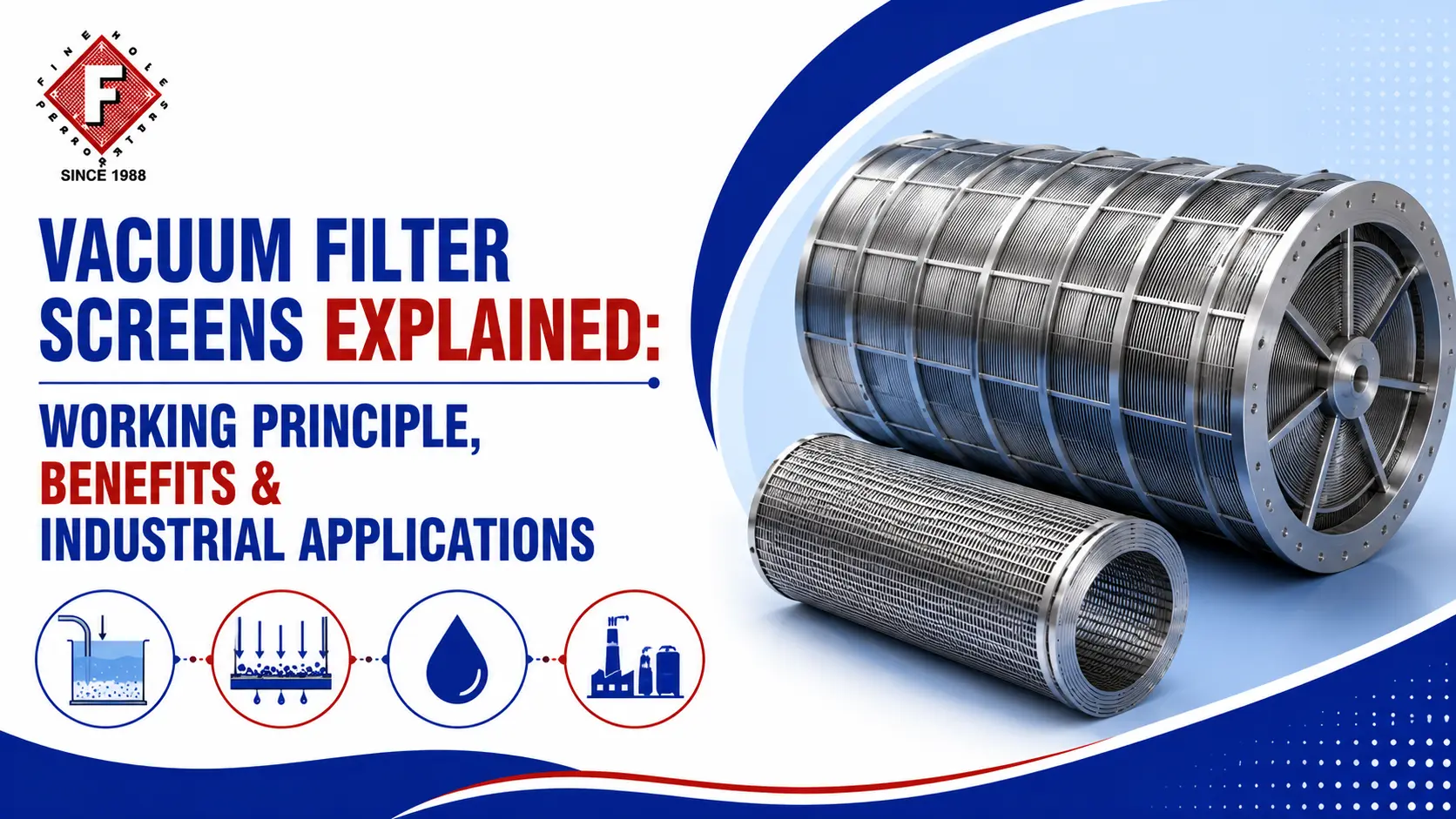
Vacuum filter screens are precision-perforated filtration components designed to separate solids from liquids using vacuum pressure. They are commonly installed on rotary vacuum drum filters, where they act as the primary filtering medium by allowing liquid to pass through while retaining solid particles on the surface.
These screens are manufactured with carefully controlled hole sizes and open areas to achieve optimum filtration performance. Depending on the application, they can be customized in terms of dimensions, thickness, perforation pattern, and unperforated margins to fit specific vacuum filter drums.
In industries such as sugar processing, where filtration efficiency directly influences product quality and recovery rates, vacuum filter screens are considered an essential operational component.
Manufacturers also produce these screens using materials such as nickel, stainless steel, and brass, each selected according to the operating environment and process requirements.
How Do Vacuum Filter Screens Work?
The effectiveness of a vacuum filter screen lies in its ability to continuously separate liquids from suspended solids through controlled vacuum pressure.
Step 1: Feeding the Slurry
The process begins when a slurry a mixture of liquid and suspended solid particles—is introduced into the rotary vacuum filtration system. The rotating drum partially immerses into the slurry tank.
As the drum rotates, the vacuum system creates negative pressure inside the drum.
Step 2: Vacuum Draws Liquid Through the Screen
The vacuum pressure pulls the liquid through the precision perforations of the filter screen while preventing larger solid particles from passing through.
This creates an efficient separation process where the filtrate moves into the collection chamber while solids remain on the outer surface.
Step 3: Formation of the Filter Cake
As filtration continues, retained solids gradually build up into a layer known as the filter cake.
In many industrial applications, this cake itself acts as an additional filtering medium, improving overall separation efficiency.
The thickness of the cake can often be controlled by adjusting the rotational speed of the drum.
Step 4: Washing and Dewatering
Many rotary vacuum filtration systems include washing stages where clean water or another suitable liquid is sprayed onto the filter cake.
This helps remove impurities before the vacuum continues extracting excess moisture, resulting in better dewatering performance.
Step 5: Cake Discharge and Continuous Operation
Once the drum completes its rotation, mechanical scrapers or discharge systems remove the filter cake from the screen surface.
The cleaned section of the drum immediately re-enters the slurry, allowing continuous filtration without interrupting production.
This continuous operating cycle is one of the biggest reasons vacuum filter screens are widely preferred in high-volume manufacturing environments.
Benefits of Using Vacuum Filter Screens
The growing adoption of vacuum filter screens across industries is driven by their operational advantages and consistent performance. Their ability to provide continuous filtration, reduce operational costs, and improve product quality makes them an essential component in industries such as sugar processing, chemicals, mining, and wastewater treatment.
High Filtration Efficiency
One of the biggest advantages of vacuum filter screens is their high filtration efficiency. Precision-engineered perforations allow liquids to pass through while retaining solid particles with remarkable accuracy. This ensures consistent separation performance, minimizes product loss, and improves the overall quality of the filtered output. Uniform hole patterns also help maintain steady flow rates throughout the filtration process.
Continuous Production
Unlike conventional batch filtration systems that require frequent interruptions, vacuum filter screens support continuous operation. As the rotary drum rotates, filtration, washing, dewatering, and cake discharge occur simultaneously, ensuring uninterrupted production. This makes them an excellent choice for industries with high processing volumes where downtime can significantly impact productivity.
Reduced Operating Costs
Vacuum filter screens contribute to lower operating costs by automating the filtration process and reducing the need for manual intervention. Their efficient design minimizes energy consumption and optimizes resource utilization, resulting in lower labor and maintenance expenses. Over time, businesses can achieve significant cost savings while maintaining consistent production levels.
Better Product Quality
Consistent filtration directly influences the quality of the final product. Vacuum filter screens provide uniform solid-liquid separation, reducing impurities and producing cleaner filtrate. In industries like sugar manufacturing, this helps lower bagacillo content and improves juice clarification, ultimately contributing to better product quality and enhanced process efficiency.
Easy Cleaning and Maintenance
Designed for industrial use, vacuum filter screens are relatively easy to clean and maintain. Their flat construction and durable materials simplify routine maintenance procedures, reducing equipment downtime. Regular cleaning also helps maintain filtration efficiency and extends the service life of both the screen and the filtration system.
Long Service Life
High-quality vacuum filter screens are manufactured using durable materials such as nickel, stainless steel, or brass to withstand demanding operating conditions. Their robust construction provides excellent resistance to wear and corrosion, allowing them to perform reliably over extended periods. This durability reduces replacement frequency and lowers long-term ownership costs.
Flexible Customization
Every industrial filtration system has unique requirements, which is why many manufacturers offer customized vacuum filter screens. Businesses can specify dimensions, hole sizes, perforation patterns, thickness, and unperforated margins to ensure compatibility with their rotary vacuum drum filters. Customized solutions help maximize filtration efficiency while meeting specific process requirements.
Industrial Applications of Vacuum Filter Screens
Vacuum filter screens are widely used in industries that require efficient solid-liquid separation and continuous filtration. Their versatility, durability, and ability to handle large volumes of slurry make them an ideal solution for a broad range of industrial processes.
Sugar Industry
The sugar industry is one of the largest users of vacuum filter screens, particularly for mud filtration and juice clarification. These screens help reduce bagacillo content in filtered juice and improve sugar recovery rates by ensuring efficient separation of solids from liquids. Their continuous operation also supports the high production demands of modern sugar mills.
Chemical Processing
In chemical manufacturing, vacuum filter screens are used for catalyst recovery, slurry filtration, and purification of process fluids. Their precision perforation ensures reliable filtration while maintaining product consistency and process stability. This helps manufacturers improve efficiency and reduce contamination risks in sensitive chemical operations.
Mining and Mineral Processing
Mining operations generate large amounts of slurry that require effective dewatering before further processing or disposal. Vacuum filter screens assist in separating water from mineral concentrates, improving recovery rates and reducing waste management costs. Their ability to operate continuously makes them suitable for demanding mining environments.
Wastewater Treatment
Municipal and industrial wastewater treatment facilities use vacuum filter screens for sludge dewatering and solid-liquid separation. Efficient filtration reduces the volume of waste requiring disposal while supporting water recycling initiatives. As environmental regulations become stricter, reliable filtration technologies play an increasingly important role in sustainable wastewater management.
Food and Beverage Industry
Vacuum filtration is also widely used in food and beverage manufacturing for applications such as starch processing, beverage clarification, and ingredient recovery. High-quality vacuum filter screens provide hygienic and consistent filtration, helping manufacturers maintain product purity and comply with strict quality standards while optimizing production efficiency.
Why Precision Manufacturing Matters
The performance of a vacuum filter screen depends heavily on the quality of its manufacturing. Even minor variations in hole size, perforation pattern, or dimensional accuracy can affect filtration efficiency and overall system performance.
Uniform perforation ensures balanced liquid flow across the entire screen surface, leading to consistent cake formation and reliable separation results. Precision manufacturing also minimizes the risk of clogging and uneven filtration, helping industries maintain stable production and reduce operational disruptions.
In addition, advanced manufacturing capabilities allow vacuum filter screens to be customized according to specific machine designs and application requirements. Choosing a precision-engineered screen from an experienced manufacturer not only improves filtration performance but also extends equipment life, reduces maintenance costs, and delivers better long-term value.
Choosing the Right Vacuum Filter Screen Supplier
Selecting the right supplier is just as important as choosing the right screen.
A trusted manufacturer should offer:
- Extensive experience in filtration screen manufacturing.
- High-quality raw materials.
- Precision perforation technology.
- Custom manufacturing capabilities.
- Consistent quality standards.
- Reliable export support for international customers.
For businesses serving the sugar industry and other industrial sectors, working with an experienced manufacturer ensures dependable product performance and long-term value.
Conclusion
Vacuum filter screens are an indispensable component of modern industrial filtration systems. Their ability to efficiently separate solids from liquids while supporting continuous production makes them valuable across sugar processing, chemical manufacturing, mining, wastewater treatment, and food industries.
By understanding their working principle and selecting precision-engineered screens manufactured to exact specifications, businesses can improve filtration efficiency, reduce maintenance costs, and enhance overall productivity.
Whether you require standard or customized solutions, investing in high-quality vacuum filter screens contributes directly to smoother operations and better long-term performance.
Looking for High-Quality Vacuum Filter Screens?
If you are searching for precision-engineered vacuum filter screens for sugar mills or other industrial filtration applications, Fine Perforators offers decades of manufacturing expertise and customized solutions tailored to specific rotary vacuum drum requirements.
With advanced manufacturing capabilities, uniform perforation technology, and a commitment to quality, Fine Perforators supplies vacuum and mud filter screens designed to improve filtration efficiency, operational reliability, and product consistency for customers in India and international markets.
Get in touch with our team to discuss your filtration requirements and discover the right vacuum filter screen solution for your business.